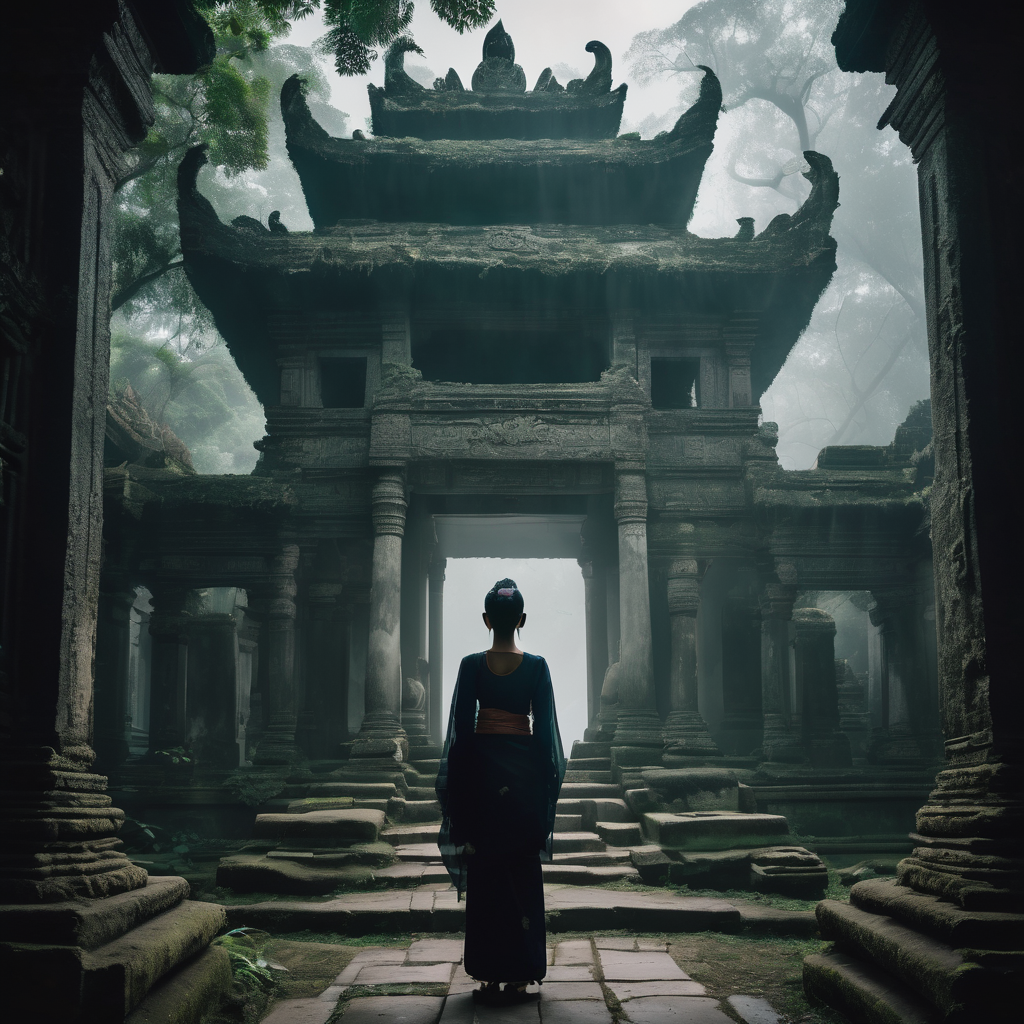
Jian Zhang, a 35-year-old construction supervisor, grapples with memories of his late mother during the Hungry Ghost Festival. As he prepares offerings, he encounters her spirit, leading to a night of reflection and reconciliation with familial traditions and the supernatural. The festival reveals the intertwining of joy, sorrow, and ancestral respect.
In the reflection of the Hungry Ghost Festival, Ling struggles with her cultural disconnection following her grandfather's death. Amidst the rituals and offerings, she seeks to reconnect with her ancestors, navigating her haunting emotions and rediscovering her identity through the vibrant traditions of her heritage.
During the Mazu pilgrimage in Taichung, Lin Wei, a young graphic designer, reflects on the interplay of tradition and modernity. Documenting the vibrant celebration, he experiences both cultural disconnection and deep connections with fellow pilgrims. The event reveals shared fears and hopes, illustrating the importance of culture and community amid urbanization.
The story explores the ghostly legends of Hantu in Pelabuhan Ratu through the journey of Ali, a history teacher. Captivated by local myths, he discovers an ancient notebook that connects him to the spirits of lost souls. As he unravels their stories, he learns about their regrets and yearnings, transforming fear into empathy and connection with the past. The narrative highlights the importance of acknowledging these forgotten tales and their impact on the present and future.
In a traditional Korean village, Minji grapples with her modern beliefs and the ancestral whispers of shamanism. During a shaman ritual, she connects with the spirits of her ancestors, facing her fears and understanding their pain. This experience illuminates her connection to her heritage and the importance of honoring familial legacies.
In the rain-drenched village of Kelantan, Linah, a young woman passionate about preserving Mak Yong, encounters the mystical spirits known as Minkumpungeh during a rehearsal. A storm conjures chaos, yet instead of fear, Linah and her friends embrace the challenge through their performance, blending tradition and spirit. This tale reflects the enchanting interplay between cultural heritage and the supernatural.
Malam Jumaat, or Thursday night, is a significant time in Malay culture where supernatural beliefs prevail. It is widely said that spirits roam freely during this night, increasing the likelihood of ghostly encounters like the Langsuyar. Personal accounts of eerie experiences highlight the tension between the living and the supernatural, ensuring that these legends persist within the community.